Detail of Peter Paul Rubens, Boar Hunt, c. 1616-18 (on the right), alongside detail of Detail of The Meeting of Dante and Virgil, 1546–49 (on the left).
From a Renaissance Tapestry to a Rubens Panel: Discover the Two Recipients of the TEFAF Museum Restoration Fund
In 2026 the fund will support the restoration of a landscape by the Flemish Baroque painter Rubes from the Gamäldegalerie Alte Meister in Dresden and a large-scale Renaissance tapestry from the Minneapolis Institute of Art
- By Mirthe Sportel
- Museum Restoration Fund
Since 2012, the TEFAF Museum Restoration Fund (TMRF) has supported and promoted the professional restoration and related scholarly research of significant museum artworks. Overseen by a committee of independent experts, the fund champions art in all its forms through a global grant program that welcomes submissions from museums worldwide and is open to artworks from any period.
This year, the TMRF has been awarded to the Gemäldegalerie Alte Meister in Dresden, to restore Peter Paul Rubens’s The Boar Hunt (ca. 1616 – 18), and the Minneapolis Institute of Art (MIA), for the restoration of a large-scale Renaissance tapestry depicting The Meeting of Dante and Virgil (design and cartoon ca. 1546 – 48; woven ca. 1547 – 49).
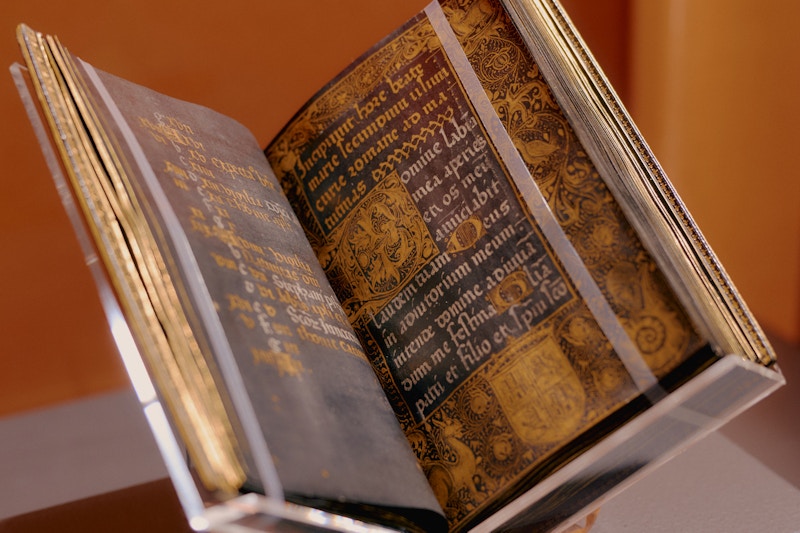
The tapestry restoration at MIA is an extension of the TMRF’s partnership with the Bank of America Art Conservation Project. In 2025, the partnership supported the restoration of the Black Book of Hours at The Hispanic Society Museum & Library, New York. The Bank of America Art Conservation Project has funded more than 275 projects in 40 countries since it began in 2010. TEFAF and Bank of America — one of the leading corporate supporters of the arts around the world — are both committed to ensuring that works of art and cultural treasure will remain for the generations to come.
Gemäldegalerie Alte Meister, Dresden
Open to the public since 1747, the Gemäldegalerie Alte Meister in Dresden is celebrated for its collection of 16th-, 17th-, and 18th-century European works, with a particular focus on Italian and Netherlandish masters. Among the museum’s internationally regarded ensemble of 20 paintings by Flemish Baroque master Rubens (alongside a further 20 paintings from the so-called “Rubens Group,”) The Boar Hunt has a unique place. It is the only autograph landscape in Dresden’s Rubens collection, standing apart from his widely known figure paintings and mythological depictions. The Boar Hunt is a dynamic, tension-filled hunting scene reaching its climax. Set in a marshy clearing, it captures all of the action in a single instant.

Peter Paul Rubens, Boar Hunt, c. 1616-18. Staatliche Kunstsammlungen Dresden, Gemäldegalerie Alte Meister, Gal.-No. 962 © Staatliche Kunstsammlungen Dresden, photo: Klut/Estel.
Although the painting is in an overall stable condition, many of its details are no longer fully legible. “In particular, the subtleties of the painterly execution — those elements that provide insight into the complex, multi-stage, and possibly collaborative process of its creation — were no longer readily discernible to the viewer,” explains Uta Neidhardt, senior curator of Dutch and Flemish paintings. The painting’s surface is covered in a thick, multi-layered varnish, which has darkened over time and now significantly diminishes the brilliance and legibility of Rubens’s original colors.
The restoration will focus on removing yellowed varnish layers, likely composed of natural resins. “We anticipate that the treatment will result in a significant visual change, as the original paint layers will become visible without the current color filter created by the aged varnish and surface dirt. The distribution of the almost pure reds and blues within the greens of the forest will once again be fully perceptible, revealing Rubens’s artistic intention,” says Neidhardt. Earlier restorations have indicated potential areas of localized adhesion issues, and the museum expects that the upcoming removal of the varnish will expose pre-existing paint loss. Filling and retouching areas where paint is damaged or missing will constitute the subsequent phase of restoration.

A view into the TEFAF Museum Restoration Fund stand at TEFAF Maastricht 2026. Photo: Maison Rowena.
“In 2027, the Rubens anniversary year, the painting will be featured as one of the artist’s undisputed masterpieces at the center of a major exhibition planned at the Gemäldegalerie Alte Meister in Dresden,” Neidhardt shares. “For the first time, the thoroughly examined and restored Dresden works will be presented to the public in a Rubens exhibition, contextualized alongside a selection of prestigious loans.”
Minneapolis Institute of Art
This year marks the first time the TMRF will support the restoration of a tapestry since the fund’s conception. The collection of the Minneapolis Institute of Art (Mia) spans 5,000 years of history, including 41 tapestries, comprising one of the great tapestry collections in the US. The Meeting of Dante and Virgil (1547 – 49) is one of the most important works of Renaissance art at Mia. At 5.3 meters high, it is also among the largest works in MIA’s collection. As the only example in a public collection outside of Italy of early Medicean tapestry manufacture, The Meeting of Dante and Virgil is probably the most important Italian Renaissance tapestry in the US.

Detail of The Meeting of Dante and Virgil, 1546–49. Wool, silk, tapestry weave, Courtesy of Minneapolis Institute of Art.
The Florentine tapestry workshop that created this work was founded in 1545 by Duke Cosimo I de’ Medici, who aimed to compete with the tapestry manufacturers in Brussels — then the main center of production. “He hired Jan Rost, a weaver from Brussels, who would establish the workshop and supervise the weavers that created The Meeting of Dante and Virgil,” explains Max Bryant, MIA’s James Ford Bell Associate Curator of European Decorative Arts and Sculpture. The design and cartoons for the tapestry were made by the painter Francesco Salviati (1510 – 1563) between 1546 and 1548 and were woven in the workshop between 1547 and 1549. These early years of the workshop represent the high point of Cosimo’s engagement with tapestry.
Currently, the tapestry is in poor condition: it is not structurally sound and cannot be displayed vertically or at an angle due to its losses and areas of weak silk. Bryant shares that “the outermost narrow border series displays the most significant losses, while multiple campaigns of reweaving can be identified throughout throughout. Overall, there are open slits and consistent silk weft loss throughout, and there is evidence of a former hanging system.” The upcoming restoration will be conducted by the Midwest Art Conservation Center and focus on cleaning, consolidating, and lining the tapestry. As Bryant explains, “the tapestry will first receive wet cleaning, after which fabric leaders will be hand stitched to the vertical sides. Missing wefts will be supplemented, and loose warps will be secured by hand stitching as needed in the most damaged areas.” Due to its current state, The Meeting of Dante and Virgil has not been on display in over 66 years. Following conservation, the tapestry will once again be on view for the public at Mia in the summer of 2026.

A view into the TEFAF Museum Restoration Fund wall at TEFAF NewYork 2026. Photo: Vincent Tullo.
Presented in partnership with ICOM-CC, each recipient of the TEFAF Museum Restoration Fund participated in a dedicated panel discussion held as part of TEFAF Talk's rich programming lineup. At TEFAF Maastricht, Peter Paul Rubens’ The Boar Hunt: Tracing Authorship in a Wooden Panel examined the intricate process of restoring and reattributing a masterpiece by Peter Paul Rubens. Upcoming, TEFAF New York featured Behind the Threads: Restoring a Renaissance Tapestry, will shed light on the complex challenges involved in conserving a rare and fragile Renaissance textile.
LEARN MORE AND APPLY TO THE 2027 TEFAF MUSEUM RESTORATION FUND