1 22 25 Hill Art Foundation 088

Astrid Lloyd Hill and J. Tomilson Hill at the Hill Art Foundation. Behind them, Cy Twombly's Untitled (1970), exhibited in The Writing's on the Wall: Language and Silence in the Visual Arts. Language and Silence in the Visual Arts. Photo: Vincent Tullo. 

The Hill Collection

TBD

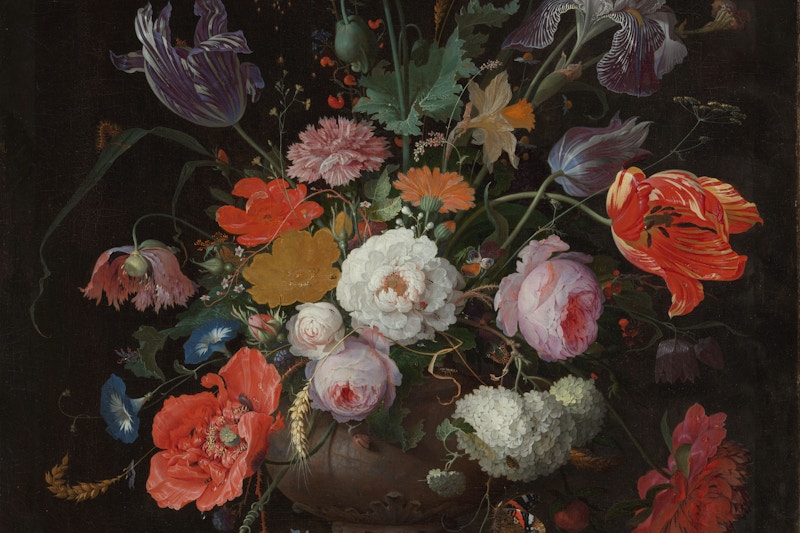
In 1996, the New York financier and collector J. Tomilson Hill and his wife Janine purchased a Warhol hand painted soup can and their first Renaissance bronze figure. In the years since, they have amassed one of the finest cross-category art collections in the world, with a focus on Old Master paintings, Renaissance and Baroque bronzes, postwar masterpieces, and contemporary art. 
 
Much of the collection is on display in their New York apartment, where works are arranged to bring out resonances between subject, material, and form. A Venus figure by Giambologna, for instance, is placed in front of a Cy Twombly blackboard, “because the curves of Venus’s back match the curves on the blackboard,” says Hill. “We like to create conversations between artists across centuries to get people to think about art in a different way.”

1 22 25 Hill Art Foundation 059

Astrid Lloyd Hill and J. Tomilson Hill at the Hill Art Foundation. Photo: Vincent Tullo.

The Hills’ love of artistic dialog is echoed in the exhibition program at the Hill Art Foundation, the not-for-profit organization the couple founded in Manhattan’s Chelsea neighborhood in 2019. The Writing's on the Wall: Language and Silence in the Visual Arts (through March 29, 2025), is a case in point. Curated by the Pulitzer Prize-winning writer, critic, and curator Hilton Als, the exhibition presents painting and sculpture from the Hill Collection by Vija Celmins, Cy Twombly, and Rudolf Stingel, among others, alongside key loans to explore the power of communication. “It gave Hilton an opportunity to juxtapose artworks he loves that explore the theme of the unspoken word,” says Hill. “These new pairings show the works in a fresh light.”  


Equally groundbreaking was Three Christs, Sleeping Mime, and the Last Supper/Pagan Paradise, a 2020 exhibition curated by the artist Charles Ray that showed Ray’s sculptures alongside Renaissance and Baroque bronzes from the Hill Collection. “Charley’s perspective sparked so many new connections and conversations,” says Hill. Ray’s engagement with the Hills’ bronze crucifixions informed a new work: Study After Algardi (2021), an enlarged replica of Alessandro Algardi’s 17th-century Christo Vivo rendered in white paper pulp. The work was later shown at Ray’s retrospective at the Bourse de Commerce in Paris. “It embodies the artistic exchange I hope to foster with the Foundation.”

1 22 25 Hill Art Foundation 242

The Writing’s on the Wall. Language and Silence in the Visual Arts at the Hill Art Foundation, featuring Cy Twombly, Jennie C. Jones’ Fluid Red Tone (in the break) (2022), Pink Pearl Eraser (1966–67) by Vija Celmins, and David Salles’ Untitled (2008). On the mezzanine, two works by Christopher Wool from 1990 and 1992. Photo: Vincent Tullo. 

The upcoming program is similarly ambitious. Artist Sam Moyer helms a group exhibition later this spring, while Igshaan Adams will take over the space in the fall. Hill is also keen to highlight a major 2026 presentation of the photographer Robert Bergman, whose work has not been on public display since 2009. True to Hill’s collecting ethos, portraits and abstract photographs by Bergman will be shown alongside cherished Old Master works from the collection. “This once-in-a-lifetime exhibition will be a chance for visitors to explore the context, painterly quality, and emotional impact of Bergman’s work,” says Hill. “I’m excited to reintroduce him to the art world.”  


Hill credits his decision to branch into contemporary art to his daughter Astrid Hill Lloyd, an art adviser and Vice President of the Hill Art Foundation, who focuses on young and mid-career contemporary artists. “If I’m not continually growing, experimenting, and increasing my understanding of what artists are thinking, then I’m not progressing as a collector,” Hill says. In recent years, with the guidance of his daughter, Hill has also acquired works by Jordan Casteel, Caroline Kent, and Jenny Saville, among others. “I wanted to introduce contemporary art into the mix because that is where the next generation of collectors initially start,” says Hill. “But the hope is that they will also develop, as I did, a historical framework and start to move backwards in time.”

1 22 25 Hill Art Foundation 288
1 22 25 Hill Art Foundation 292

Steve Wolfe, Untitled (Bookends), 1990. Photo: Vincent Tullo.

For the Hills, sharing their collection via their foundation is a way of getting people to do just that. “I was fortunate to grow up in New York and be exposed to all kinds of art,” says Hill, explaining that as a child his parents would take him to museums and the homes of art collector acquaintances, among them William Burden, then the president of the Museum of Modern Art. “Not everyone is so lucky, and one of the things you realize in the art world is the importance of connectivity and accessibility.”  


Which is why making the arts more accessible, particularly to young people, is at the heart of the Hill Art Foundation. Located in a 12-story Peter Marino-designed development with views of the adjacent High Line, the Foundation has a welcoming atmosphere and is free to enter. “We want people to take their time to enjoy and discuss the artworks on display,” says Hill. Another key focus is education. The family, in collaboration with Sarah Needham, the Foundation’s Executive Director, runs three programs that help New York City high school students develop leadership skills, gain an understanding of art history, and build career pathways in the art world by offering them access to curators, exhibitions, artists, and museum professionals. “I’ve learned a lot from these kids, too,” says Hill. “They’re constantly asking questions and offering new perspectives on the collection.”  

1 22 25 Hill Art Foundation 266

The Writing’s on the Wall. Language and Silence in the Visual Arts at the Hill Art Foundation, featuring Cy Twombly, Jennie C. Jones’ Fluid Red Tone (in the break) (2022), Pink Pearl Eraser (1966–67) by Vija Celmins, and a detail of Rachel Harrison’s Hermes 3000 (2021). Photo: Vincent Tullo.

For a new work to enter the collection, it must be of the highest quality and be by a game-changing artist with what Hill describes as “staying power.” Gamechangers, he explains, have the ability to reinvent themselves every decade, a good understanding of art history, and know how they will move it on to the next plane. Among those Hill mentions are Peter Paul Rubens, Pablo Picasso, Andy Warhol, Francis Bacon, Willem de Kooning, and Cy Twombly, all of whom Hill has collected in depth. “I was never interested in the one-of-each approach,” he says, adding that he sold his only Rothko because he could not source three further works of equal quality. “I want at least four works by an artist to see their evolution.”  


Although Hill insists art should not be treated as an investment, he applies the same discipline and factor analysis to collecting as he would to investing. As well as thoroughly researching the artist and context of the work, he assesses his competition. “Ask yourself questions like who else is buying the work? Which museums own the work? And which curators like the work?” he says. Equally important is verifying the provenance, condition, and legal documentation of each piece. “When you buy a work of art, you want to be sure it is what it says it is and that you’re paying the right price for it,” he adds.  


Astrid has taken heed of her father’s advice. “Like my father, I do a lot of research before acquiring a new work,” she says. “I’m looking for artists who know the history of art, are constantly reinventing themselves and growing their practice, and can hold their own against the gamechangers in the collection.” One such artist is Sarah Crowner, whose large-scale sewn canvases speak to mid-20th-century artists like Ellsworth Kelly and Henri Matisse. In 2023, Astrid helped organized The Sea, the Sky, a Window at the Foundation, which highlighted Crowner’s interest in Twombly. “She’s also continually exploring new ground and connections whether that be through her geometric compositions or through her set and costume design for the American Ballet Theatre.”  

1 22 25 Hill Art Foundation 312

Vija Celmins’ Blackboard Tableau #8 (Edward) (2012), on view at the Hill Art Foundation. Photo: Vincent Tullo. 

1 22 25 Hill Art Foundation 384

Despite their extensive list of selection criteria, both father and daughter are keen to emphasize that they will only acquire works that resonate on a personal level. “Above all else, you have to really love the work and want to live with it every day,” says Hill. “I love color,” says Astrid, “so I’ve always focused on that.”  


As for the future of the collection, “I think it will be different strokes for the different objects,” says Hill. And the Foundation? “If Astrid wants and has the time to take it on, I think it would be a great thing for her and a great thing for our collection.” In the meantime, Hill and his daughter are busy planning prospective purchases, studio visits, and exhibitions at the Foundation. “We’re constantly pinging each other with new ideas and, in Astrid’s case, young artists for me to look at,” says Hill. Among those he pinpoints are Gwen O’Neil and Lauren Quin, whose work he has recently acquired. “My dad’s helped me with some of my acquisitions, and I’ve helped him with some of his,” says Astrid. “Over the years, we’ve both been willing to look, listen, and learn from each other.” Which is, of course, what makes them such a formidable team.

1 22 25 Hill Art Foundation 270

Ellen Gallagher, DeLux, 2004–05. Photo: Vincent Tullo.

Presented in partnership with AXA XL, TEFAF’s Multigenerational Collecting series investigates the complexities behind family collections, exploring how collectors have shaped their collections across generations, developed their interests and connoisseurship, and how their collections present opportunities to contribute to philanthropic endeavors within and beyond the art world.

During TEFAF New York 2025, TEFAF Programming presented a TEFAF Talk, Multigenerational Collecting: Exploring the Hill Collection Across Generations, exploring the Hill family’s multigenerational approach to collecting art and its impact on the Hill Art Foundation.

Photography by: Vincent Tullo

Related tags Collector Interview

TEFAF Stories offers unique perspectives into the world of fine art, antiques, and design.